
Supply chain
EU rejects 31 Indian spice lots in six months as buyers demand traceability
An ICRIER brief counts 31 EU rejections of Indian herbs and spices from October 2025 to April 2026 and blames weak traceability to the farm.
Published · Data as of · 4 min read
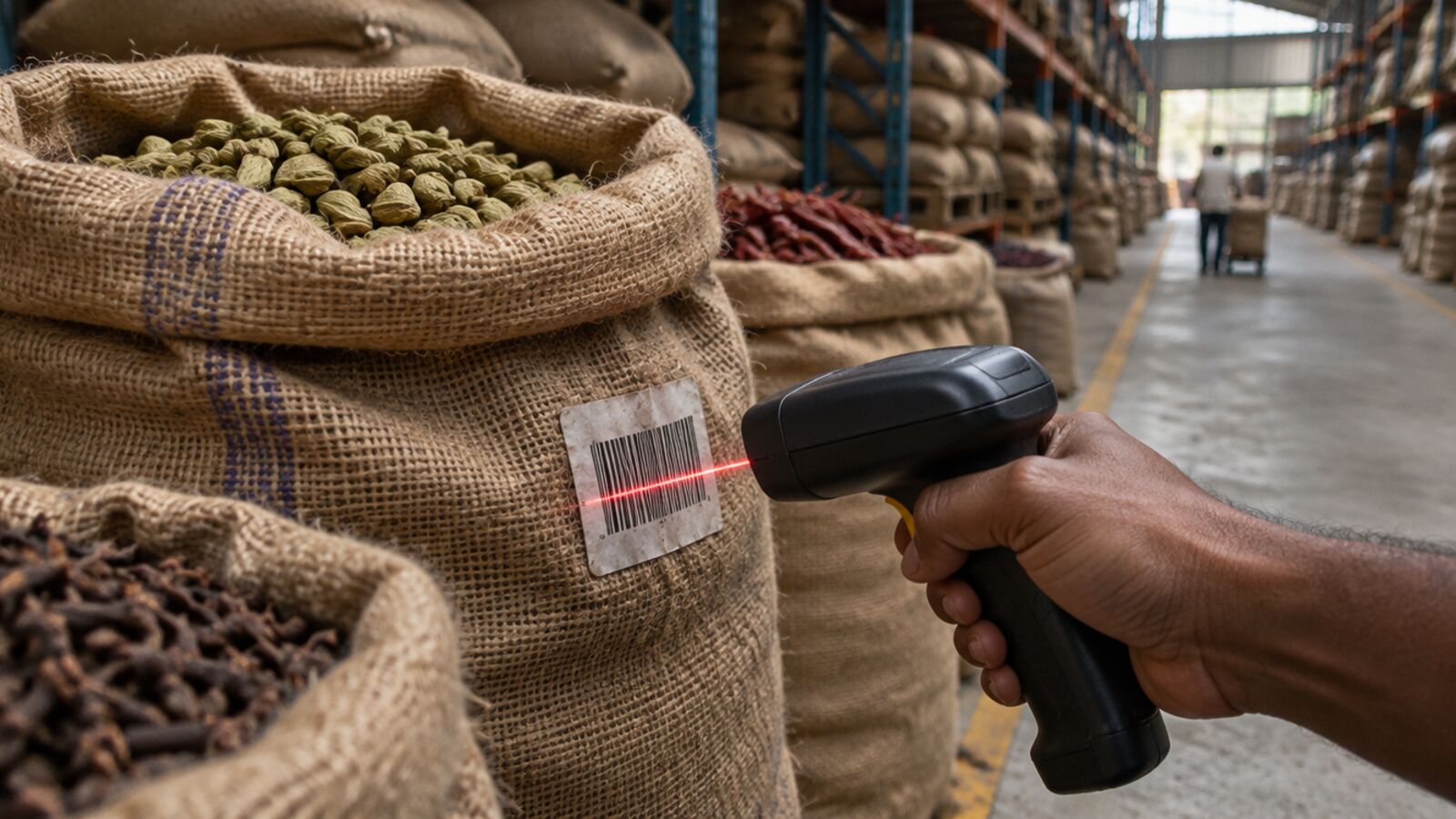
The European Union rejected 31 herb and spice consignments from India between October 2025 and April 2026, according to a policy brief published in July 2026 by the Indian Council for Research on International Economic Relations (ICRIER) [1]. The brief says contamination is hard to trace in conventional spices because records rarely link a lot back to the farm [1].
That gap matters to jeera (cumin) and dhania (coriander) exporters because importers now ask for traceability alongside a clean test report. At an Indo-Dutch seminar in May 2026, World Spice Organisation chairman Ramkumar Menon said international buyers look beyond quality to transparency, labour conditions and reliable traceability [2].
Rejections point back to the farm
ICRIER's examples from the EU's RASFF alert system include chlorpyrifos and hexaconazole in whole coriander seed notified by Denmark on 5 December 2025, chlorpyrifos in a masala notified by Czechia and ethylene oxide in biryani masala notified by the Netherlands on 5 January 2026 [1]. Other cases involved Salmonella and Bacillus cereus in turmeric powder [1].
The brief argues that pesticide problems often begin before FSSAI's rules apply, since the regulator's standards start after production [1]. It says aggregators, commission agents and local traders at mandis do not keep a record of each purchase from farmers, which makes contaminated lots hard to trace [1]. In conventional spices, ICRIER found, limited traceability to the farm makes the source of contamination difficult to identify [1].
Organic supply is the exception. ICRIER notes that the organic chain already has traceability through the National Programme for Organic Production and the PGS-India system [1].
Testing capacity is uneven
Traceability depends on reliable lab data. ICRIER found gaps there too.
| Measure | Figure | Source |
|---|---|---|
| EU rejections of Indian herbs and spices, Oct 2025 to Apr 2026 | 31 consignments | [1] |
| FSSAI-recognised primary food laboratories | 232 | [1] |
| Of which able to test spices | 169 | [1] |
| Spice-testing labs in seven states or regions | 109 | [1] |
| Extra cost when lab results conflict | INR 25,000 to 30,000 | [1] |
| Time per test | about 4 to 10 days | [1] |
Stakeholders told ICRIER that a sample passed by one laboratory can fail in another [1]. ICRIER recommends a government-led mechanism for traceability to the farm and the collection of production data for all spices [1].
Export rules are already lot-based
Spices Board India's controls work at the consignment level. Since 16 June 2025, exporters whose cumin was flagged by the EU or UK for residue breaches must clear pesticide residue tests through the Board's Export Support System before shipping to the EU, alongside the mandatory ethylene oxide test [3]. A consignment that fails cannot be exported [3].
The UK rules from 1 January 2026 tie an official certificate for seed spices under HS 0909 to cleared analytical reports for pesticide residues and ethylene oxide [4]. Both systems require exporters to match a sample, a lab report and a shipment, which is the basic unit of traceability.
Spices Board secretary P. Hemalatha told the International Spice Conference in Kochi in February 2026 that traceability and food-safety assurance are becoming central to market access and called for harmonised residue limits and testing protocols [5].
Buyers are building their own systems
Large ingredient companies are not waiting for a national system. ofi launched its first spices sustainability strategy, Spice Maps, in December 2025, covering pepper, chile, turmeric, onion, cassia and coconut across seven origins including India [6]. In Cambodia, 3,000 pepper farmers use the ofi Direct app to sell to buyers, which the company says creates full traceability [6]. In India, ofi says it is helping chilli farmers cut chemical inputs [6].
Processors are adding in-house labs. Khetika's Rs 10 crore plant at Unjha, announced in August 2026, includes testing for raw material approval, batch release and pesticide residues [7].
What the trade is watching
The first marker is RASFF notifications for Indian cumin and coriander in the 2027 crop year. The second is whether the government acts on ICRIER's call for farm-level traceability [1]. The third is whether more exporters adopt farm-to-lot records of the kind ofi uses in pepper [6]. No national traceability mandate for conventional seed spices had been announced on any page opened for this article.
Questions and answers
Why do Indian spice exports get rejected in Europe?
Most rejections involve pesticide residues, ethylene oxide or microbes such as Salmonella. An ICRIER brief counted 31 EU rejections of Indian herbs and spices between October 2025 and April 2026.
Is there a traceability system for Indian spices?
Organic spices are traced through the National Programme for Organic Production. Conventional spices rely mainly on consignment-level testing by Spices Board India. ICRIER says records rarely link lots back to farms.
What do European buyers want beyond a clean lab report?
Buyers increasingly ask for traceability, transparency and evidence on labour and environmental practices, speakers told an Indo-Dutch spice seminar in May 2026.
Sources
- ICRIER (Mukherjee, Mukherjee and Dube). Policy Brief 73: Streamlining the Indian spices market: issues and way forward, 2026-07.
- Outlook Business (PTI). Sustainability, stricter food safety standards critical in global spice trade: experts, 2026-05-07.
- Spices Board India. Circular No. 03/2025-26: Export of cumin to EU, monitoring mechanism for testing of pesticide residues, 2025-06-05.
- Spices Board India. Trade Advisory 1/2025-26: official certificate for export of spices to the United Kingdom, 2025-11-25.
- Devdiscourse (PTI). Trust, traceability key to country's spice trade future: Spices Board India Secretary, 2026-02-23.
- ofi. ofi launches first spices sustainability strategy as demand for plant-based ingredients accelerates, 2025-12-16.
- BW Retail World. Khetika invests Rs 10 cr to set up 500-MT spices plant in Gujarat, 2026-08-21.
Analysis by the India Spices Market editorial desk. For information only, not trading or investment advice.
Related
More from Intelligence.
Supply chain
El Nino and dry soils slow rabi sowing in India's jeera and dhania belt
26 November 2026 · 4 min read
Supply chain
Monsoon 2026 ends 13% short, leaving dry soils for jeera and dhania sowing
26 November 2026 · 4 min read
Supply chain
Steam sterilisation and colour sorting become musts for spice exporters
26 November 2026 · 4 min read
Read the market here. Meet it in Gandhinagar.
Every topic on this page is on the programme on 24 April 2027, with the people who move these prices in the room.
Registration opens 1 December 2026