
Supply chain
Monsoon 2026 ends 13% short, leaving dry soils for jeera and dhania sowing
India got 87% of normal monsoon rain in 2026. Kutch got 57.60% of its average, Rajasthan's deficit topped 20% and Gujarat's dams are below normal.
Published · Data as of · 4 min read
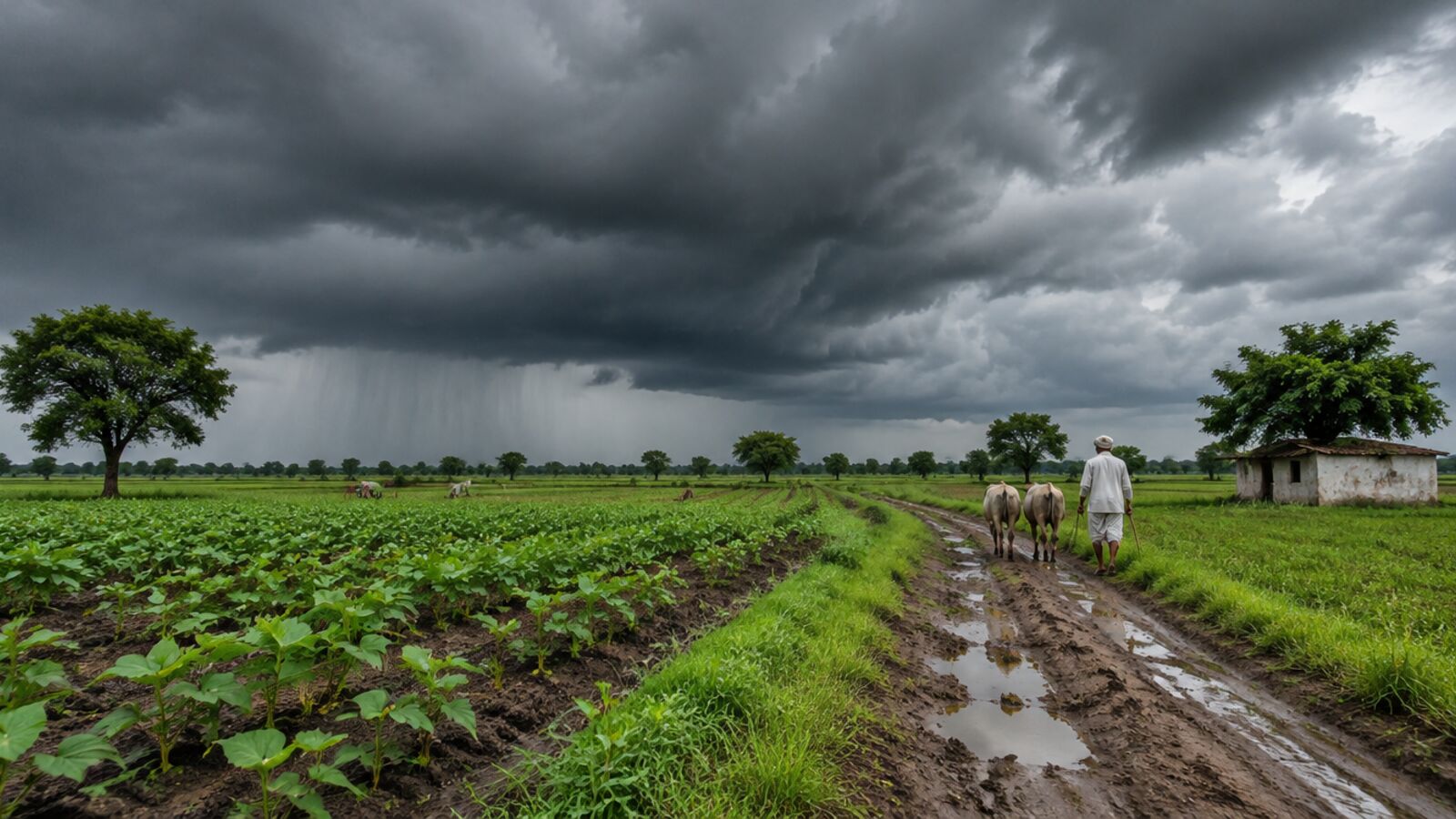
India's 2026 southwest monsoon delivered 87% of its long period average (LPA), the India Meteorological Department (IMD) said at the end of the season [1]. The shortfall was sharper in parts of the seed spice belt: Kutch received 57.60% of its 10-year average and Rajasthan's deficit was over 20%, the highest in 16 years [2][3].
The rain that fell between June and September sets the soil moisture and well water that rabi crops such as jeera (cumin) and dhania (coriander) draw on after sowing in late October and November [4]. Commodity Board said slightly below-normal rain in Gujarat raised the crop's reliance on irrigation this season [4].
The national monsoon ended 13% below normal
Country-wide rainfall was 759.4 mm against an LPA of 868.6 mm [1]. June delivered 65% of normal, July 101%, August 84% and September 92% [1]. North-west India, which includes Gujarat and Rajasthan, received 94% of its LPA, helped by a September that was 117% of normal [1].
Of India's 36 meteorological subdivisions, 17 covering about 42% of the area ended the season deficient [1]. IMD said a weak El Nino developed in June and strengthened as the season went on [1].
Gujarat and Rajasthan had uneven rain
The state totals hide wide gaps. Gujarat received 810.64 mm, which is 89.19% of normal, when the monsoon withdrew from the state on 3 October, DeshGujarat reported [2]. South Gujarat was the only zone above normal [2].
| Area | Rainfall | Basis | Source |
|---|---|---|---|
| Kutch | 57.60% | of 10-year average, season to 3 Oct | [2] |
| North Gujarat | 71.04% | of 10-year average, season to 3 Oct | [2] |
| Saurashtra | 71.43% | of 10-year average, season to 3 Oct | [2] |
| West Rajasthan subdivision | -27% | departure from normal, 1 Jun to 2 Sep | [5] |
| East Rajasthan subdivision | -25% | departure from normal, 1 Jun to 2 Sep | [5] |
| Saurashtra and Kutch subdivision | -35% | departure from normal, 1 Jun to 2 Sep | [5] |
The subdivision figures from ICAR-CRIDA are as of 2 September, before a wetter September [5]. For the whole season, Business Standard reported a Rajasthan deficit of over 20%, citing the state disaster management department, with IMD district deficits of 58% in Pali, 54% in Jaisalmer and 50% in Jalore [3].
Reservoirs and soils are drier than last year
Water storage is lower going into the winter. Gujarat's 19 major reservoirs held 13.437 billion cubic metres (BCM) on 12 November 2026, equal to 74.60% of capacity, against 17.282 BCM a year earlier, Central Water Commission data reported by Down To Earth show [6]. Storage was 6.82% below normal [6].
Rajasthan's seven monitored reservoirs held 2.987 BCM, equal to 59.54% of capacity, against a normal of 4.325 BCM for the date [6]. Nationally, 178 reservoirs were 63.25% full and 19.86% below normal [6].
Gujarat has declared Kutch, Devbhoomi Dwarka, Porbandar and Jamnagar districts drought-hit and 80 tehsils in 14 districts drought-affected, according to the same report [6]. About 52.5% of India was under dry or drought conditions on 16 September, IIT Gandhinagar's India Drought Monitor showed [7].
The effect showed in the fields. Nationally, the shortfall in early wheat sowing at the end of October was attributed to insufficient soil moisture [8]. In Rajasthan, a Jaipur trader told Business Standard that farmers were waiting for cooler weather and some rain, with only those with irrigation able to sow [3].
The problem is the reverse of last season. In November 2025 Kedia Advisory described Gujarat as having one of its slowest cumin sowing years because of excess soil moisture, even as sown area reached 40,012 hectares by 20 November [10]. Rajasthan farmers were then waiting for wet fields to dry [10].
Little rain is forecast before harvest
IMD forecast below-normal November rainfall for the country and above-normal temperatures over most regions [9]. Commodity Board said forecasts for early November showed mostly dry weather or light rain in Gujarat and Rajasthan, with no widespread soaking rain [4].
The markers to watch are weekly state sowing reports through December, reservoir releases for rabi irrigation in Gujarat and IMD's December to February outlook, due at the end of November [9]. Together they will show whether late-sown jeera and dhania can make up for the dry start.
Questions and answers
How much monsoon rain did India get in 2026?
India received 87% of its long period average rainfall in the June to September 2026 monsoon, according to the India Meteorological Department. Of 36 subdivisions, 17 covering about 42% of the area ended the season deficient.
How much rain did Gujarat get in monsoon 2026?
Gujarat received 810.64 mm of rain, which is 89.19% of normal, by the time the monsoon withdrew on 3 October 2026. Kutch got 57.60% of its 10-year average, North Gujarat 71.04% and Saurashtra 71.43%, while South Gujarat was above normal.
Why does monsoon rain matter for jeera and dhania?
Both are sown after the monsoon, from late October through November. They rely on stored soil moisture and irrigation. A weak monsoon leaves drier soils and lower reservoirs, which can delay sowing and reduce area.
Sources
- India Meteorological Department. Salient features of the 2026 southwest monsoon season, 2026-09-30.
- DeshGujarat. Southwest monsoon officially withdraws from entire Gujarat on October 3, 2026-10-03.
- Business Standard. Rainfall deficit, high temperatures delay rabi sowing in Rajasthan, 2026-11-02.
- Commodity Board (CMB News). Indian cumin prices poised to firm as dry soils threaten new rabi crop, 2026-11-05.
- ICAR-CRIDA (AICRP on Agrometeorology, from IMD data). Progress of rainfall as on 02 September 2026 in the meteorological subdivisions of India, 2026-09-02.
- Down To Earth (citing Central Water Commission). India's 178 major reservoirs lose 5 billion cubic metres of water in a week, 2026-11-12.
- Down To Earth. India sets lower food production target for 2026-27 as El Nino clouds Rabi season, 2026-09-30.
- Siasat (PTI). Rabi sowing down 46 pc as deficient monsoon dries up soil moisture, 2026-11.
- India Meteorological Department. Monthly outlook for rainfall and temperature for November 2026, 2026-10-31.
- Kedia Advisory (via Investment Guru India). Jeera report as on 20 November 2025, 2025-11-20.
Analysis by the India Spices Market editorial desk. For information only, not trading or investment advice.
Related
More from Intelligence.
Supply chain
El Nino and dry soils slow rabi sowing in India's jeera and dhania belt
26 November 2026 · 4 min read
Supply chain
Steam sterilisation and colour sorting become musts for spice exporters
26 November 2026 · 4 min read
Supply chain
EU rejects 31 Indian spice lots in six months as buyers demand traceability
26 November 2026 · 4 min read
Read the market here. Meet it in Gandhinagar.
Every topic on this page is on the programme on 24 April 2027, with the people who move these prices in the room.
Registration opens 1 December 2026