
Supply chain
Steam sterilisation and colour sorting become musts for spice exporters
EU buyers reject ethylene oxide and the UK checks 20% of Indian seed spices from 2026. Steam sterilisers and colour sorters are now basic export kit.
Published · Data as of · 4 min read
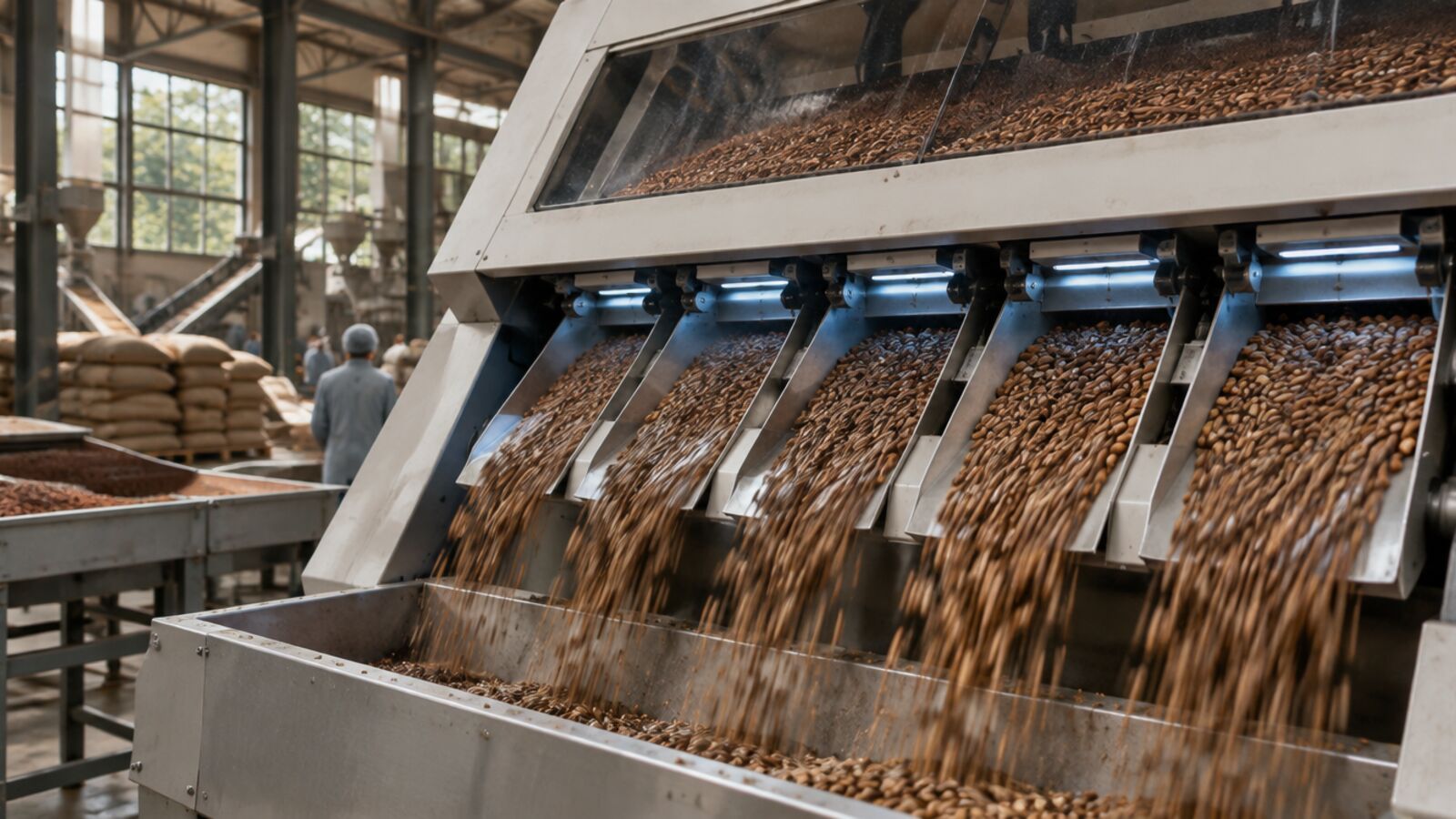
Steam sterilisation, mechanical cleaning and optical sorting have become basic requirements for Indian spice exporters selling to Europe and the UK, where buyers reject ethylene oxide (EtO) and border checks on seed spices rose in 2026 [1][2]. The UK began checking 20% of Indian consignments of seeds such as cumin and coriander from 1 January 2026, with clearance tied to pesticide residue and EtO tests [2].
For jeera (cumin) and dhania (coriander) exporters, the processing line now decides market access as much as price does. A lot that fails on microbes, residues or foreign matter can be detained at the port. Past failures have already raised EU check rates for Indian cumin to 30% [1].
Buyers want heat, not gas
CBI, the Dutch government's import promotion agency, describes heat sterilisation as a natural, chemical-free option popular with European buyers and tells exporters not to use banned fumigants such as EtO [1]. EtO caused 16 of the pesticide issues reported for spices and herbs on the EU's Rapid Alert System for Food and Feed (RASFF) in 2025, which was 16% of the total [1]. Salmonella made up 6% of 279 RASFF issues for the category that year [1].
Spices Board India's own EtO guidelines, Rev.02 dated 28 October 2024, tell exporters to avoid EtO entirely and to test raw materials, packaging and finished goods for it [3]. The guidelines list steam sterilisation, irradiation (not for NPOP organic products) and other FSSAI-approved methods as alternatives [3]. They note that the European Spice Association (ESA) advises against irradiation for EU-bound spices and suggests steam instead [3].
Cleaning and sorting set the physical spec
Before sterilisation comes cleaning. The ESA allows a maximum of 10 g/kg of extraneous matter. CBI recommends physical sorting plus optical or metal detectors to meet it [1]. The Spices Board guidelines add inspection, sorting, drying to a safe moisture level and separate storage for treated and untreated lots [3].
The Spices Board's spice parks show what a full seed spice line looks like. Its facility list for Guna, a coriander-focused park in Madhya Pradesh, includes:
| Stage | Equipment | Capacity |
|---|---|---|
| Pre-cleaning | Rotating drum or vibro-screener | 2 t per hour |
| Grading | Density grader | 2 t per hour |
| Colour sorting | Continuous colour sorter | 1 t per hour |
| Grinding | Continuous grinder | 500 kg per hour |
| Steam sterilisation | Batch processor, 1 t per hour boiler | 250 kg per hour |
Source: Spices Board India, Spices Park Guna facility details [4].
The gap between the stages is the bottleneck. At Guna, sterilisation capacity is an eighth of cleaning capacity (calculated) [4], so only a fraction of what the line cleans can be steam treated.
Private plants add labs and steam lines
New private capacity is being built around testing. Khetika announced a Rs 10 crore spice plant and quality laboratory at Unjha in August 2026, with an initial capacity of 500 tonnes and testing for pesticide residues, microbes and contaminants [5]. The company said it is targeting the US, Europe and the Middle East [5].
Exporters now market the treatment method itself. Chennai-based Value Ingredients listed steam sterilised ground spices and steam sterilised coriander, alongside EtO-treated lines, at Fi India in Mumbai in August 2026 [6]. Offering both reflects divided demand: EtO is not accepted in the EU [1], while other markets still permit it under their own limits [3].
Public support covers the front end of the line. Spices Board's SPICED programme for 2026-27 lists assistance for spice cleaner-graders, seed spice threshers, polishers, washing equipment and driers, but no component for sterilisation or laboratories [7].
What exporters are watching
The first marker is RASFF notifications for Indian cumin and coriander in 2026, which drive EU check frequencies; Indian cumin has faced 30% pesticide checks since January 2025 and coriander 20% [1]. The second is whether the UK keeps its 20% rate after the first year [2]. The third is private investment in continuous steam sterilisers, which would close the gap between cleaning and sterilisation capacity seen at the public parks [4].
Questions and answers
Why is steam sterilisation used for spices?
Steam kills bacteria such as Salmonella without chemical residues. European buyers prefer it because ethylene oxide is not accepted in the EU and irradiated food is unpopular with consumers there.
Can Indian exporters still use ethylene oxide on spices?
Spices Board India's guidelines tell exporters to avoid ethylene oxide as a sterilising or fumigating agent and to test raw materials and finished goods for it. Some non-EU markets still set their own limits, but EU and UK checks test specifically for it.
What cleaning standard do spices need for Europe?
The European Spice Association allows a maximum of 10 g/kg of extraneous matter, according to CBI. Exporters typically meet it with pre-cleaning, density grading, colour sorting and metal detection.
Sources
- CBI, Netherlands Ministry of Foreign Affairs. What requirements must herbs and spices meet to be allowed on the European market?, Updated 2026-05-12.
- Spices Board India. Trade Advisory 1/2025-26: official certificate for export of spices to the United Kingdom, 2025-11-25.
- Spices Board India. Comprehensive guidelines on prevention of ethylene oxide (EtO) contamination in spices exports, SB/EXP/SOP/02 Rev.02, 2024-10-28.
- Spices Board India. Details of processing and storage facilities at Spices Park, Guna, As printed (EOI dated April 2021).
- BW Retail World. Khetika invests Rs 10 cr to set up 500-MT spices plant in Gujarat, 2026-08-21.
- Ingredients Network (Fi India 2026 exhibitor listing). Value Ingredients Pvt. Ltd., Fi India 2026, stand 4C95, 2026-08-26.
- Spices Board India. Programmes and schemes: SPICED components for 2026-27, 2026.
Analysis by the India Spices Market editorial desk. For information only, not trading or investment advice.
Related
More from Intelligence.
Supply chain
El Nino and dry soils slow rabi sowing in India's jeera and dhania belt
26 November 2026 · 4 min read
Supply chain
Monsoon 2026 ends 13% short, leaving dry soils for jeera and dhania sowing
26 November 2026 · 4 min read
Supply chain
EU rejects 31 Indian spice lots in six months as buyers demand traceability
26 November 2026 · 4 min read
Read the market here. Meet it in Gandhinagar.
Every topic on this page is on the programme on 24 April 2027, with the people who move these prices in the room.
Registration opens 1 December 2026