
Markets
US becomes top Indian spice market even as its purchases fall 12%
The US bought about USD 624 million of Indian spices in 2025-26, overtaking China. Tariff relief helped; FDA import alerts remain the main compliance risk.
Published · Data as of · 4 min read
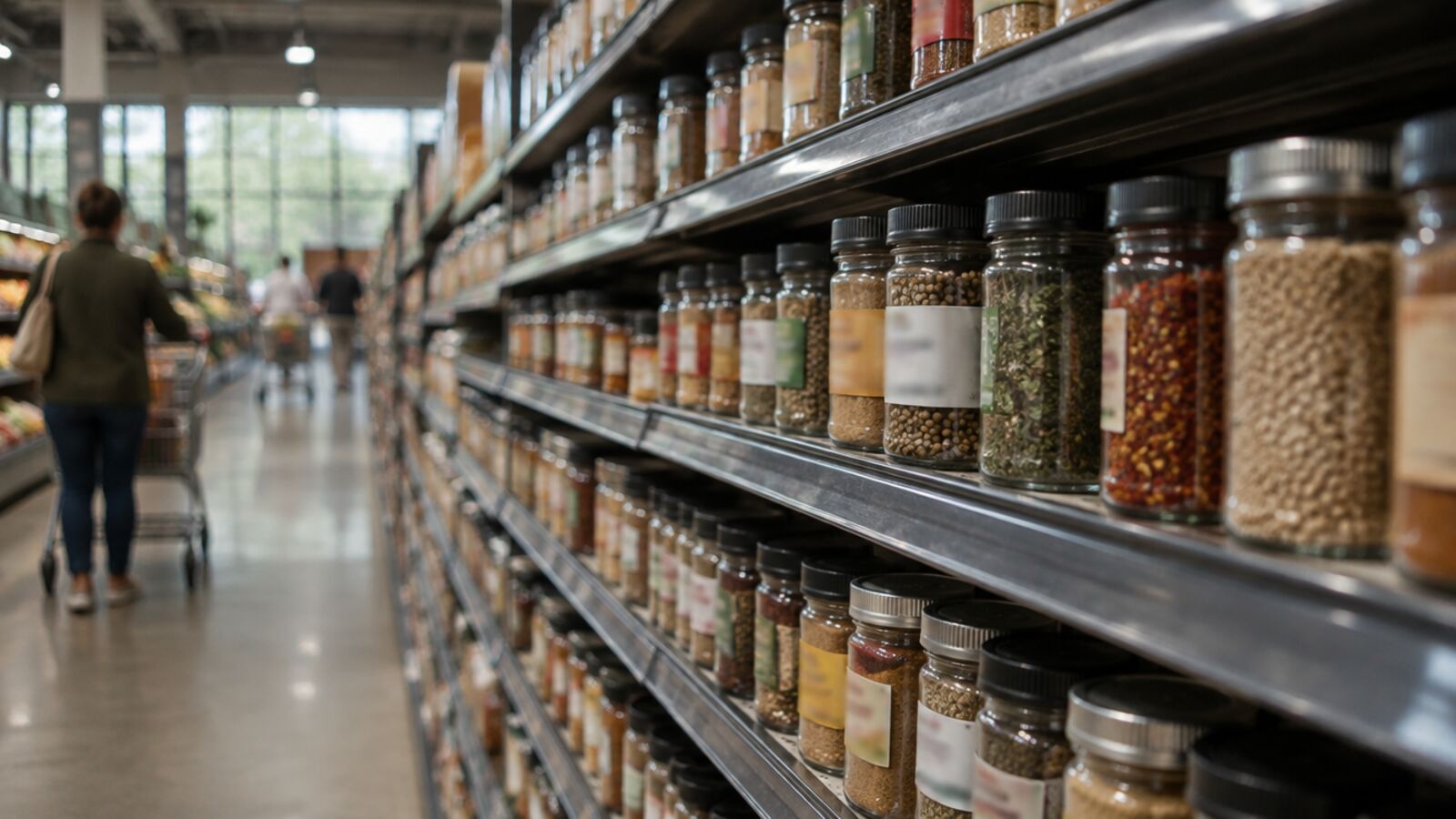
The United States overtook China as the largest buyer of Indian spices by value in 2025-26, even though its own purchases fell about 12%, according to trade figures reported by Commodity Board [1]. US buyers took USD 624 million of Indian spices against USD 711 million a year earlier, while exports to China fell 32% to about USD 519 million [1].
The ranking matters because the US is the most demanding large market Indian exporters serve. It takes about 14% of India's USD 4.43 billion of spice exports (calculated) [1], it sets tariffs that changed twice in the past year and its Food and Drug Administration (FDA) can stop a supplier's shipments at the border without testing them.
Two data series show the same 12% decline
Published figures for the US market differ by source but agree on direction. Commodity Board, which does not name its data source, gives USD 711 million for 2024-25 and USD 624 million for 2025-26 [1]. A report cited by The Indian Express and carried by FreshPlaza gives USD 654.7 million and USD 578.7 million [2].
| Measure | 2024-25 | 2025-26 | Change |
|---|---|---|---|
| Spice exports to US (Commodity Board) | USD 711 mn | USD 624 mn | -12.2% |
| Spice exports to US (Indian Express report) | USD 654.7 mn | USD 578.7 mn | -11.6% |
| Spice exports to China (Commodity Board) | over USD 769 mn | about USD 519 mn | -32% |
Sources: [1][2]. US changes are calculated.
The mix inside the US total shifted. Commodity Board reported that US imports of Indian pepper and turmeric increased in 2025-26 while purchases of spice oleoresins declined [1]. FreshPlaza linked the fall in spice sales to tariff increases introduced between August 2025 and February 2026 [2].
Tariffs rose in 2025, then spices were exempted
Relief for whole spices came first. A White House fact sheet dated 14 November 2025 said spices were among the agricultural products that would no longer be subject to reciprocal tariffs, with the change effective from 13 November 2025 [3]. The Global Trade Research Initiative (GTRI) estimated that India supplied only USD 548 million of a USD 50.6 billion US import basket covered by the exemption [4].
GTRI's category breakdown shows where India's US spice trade sits: pepper and capsicum preparations at USD 181 million, anise and cumin seed categories at USD 85 million, ginger, turmeric and curry spices at USD 84 million and cardamom and nutmeg at USD 15 million [4].
The February 2026 interim framework between India and the US went further. India Sea Trade News reported on 10 February 2026 that duties on many Indian goods were cut from as high as 50% to 18% or zero, with black pepper, turmeric, cumin, cardamom and chilli in the zero-duty group [5]. Tejas Gandhi, chairman of the Federation of Indian Spice Stakeholders, told Akashvani News the tariff cut would boost exports [6].
The deal is not final. In October 2026 Donald Pratt, chief executive of the American Spice Trade Association, said he was optimistic the US would keep supporting the exemption of tariffs on spices, according to a PTI report that put annual US imports of Indian spices at about USD 700 million [7]. The same report said US Trade Representative Jamieson Greer described an agreement as not imminent [7].
FDA enforcement targets firms and products
Tariffs set the price. The FDA sets who can ship. Under Import Alert 28-02, black pepper from India must travel with a certificate from India's Export Inspection Council, which tests each lot for Salmonella, filth, mould and foreign matter [8]. Shipments without the certificate may be detained without physical examination, according to the alert page published on 5 March 2026 [8].
Firm-level listings continue. In September 2026 the FDA placed Fish Masala from Hyderabad-based Tejas Food Industries LLP on the Red List of Import Alert 99-19 for Salmonella, Siasat reported, citing The Times of India [9]. It was the firm's second US import alert in about 15 months [9].
Screening also tightens after outbreaks. The FDA linked a multistate Salmonella outbreak to moringa leaf powder imported from India, with 131 illnesses in 38 states and onset dates from 22 August 2025 to 14 June 2026 [10]. The agency said it had increased screening of imported moringa powder from India [10]. Moringa is not a culinary spice, but the case shows how quickly scrutiny of Indian powdered botanicals can rise.
What exporters are watching
The first marker is the final text of the India-US trade agreement and whether spice exemptions survive it [5][7]. The second is the FDA Red List, where a single listing can block a brand's shipments [9]. The third is whether pepper and turmeric keep gaining share of the US basket while oleoresins slip [1]. No 2026-27 country-wise figure for US spice imports from India was found on any page opened for this article.
Questions and answers
What is India's largest spice export market?
The United States was the largest buyer of Indian spices by value in 2025-26, taking about USD 624 million according to trade figures reported by Commodity Board. China, the leader in earlier years, fell to about USD 519 million after a 32% drop.
Are Indian spices subject to US tariffs?
A US executive order removed spices from the reciprocal tariff list from 13 November 2025. Under the February 2026 interim framework, trade press reported zero duty for black pepper, turmeric, cumin, cardamom and chilli, but the full agreement was not final as of October 2026.
Why are Indian spice shipments detained by the FDA?
Most detentions relate to Salmonella or filth. Black pepper from India needs an Export Inspection Council certificate under Import Alert 28-02. Firms on the Red List of Import Alert 99-19 can have shipments detained without physical examination.
Sources
- Commodity Board (CMB News). Turmeric market steadies as US demand offsets Chinese retreat, 2026-07-01.
- FreshPlaza (citing The Indian Express). Indian fruit and vegetable exports grow despite U.S. tariffs, 2026-05-11.
- The White House. Fact Sheet: President Donald J. Trump modifies the scope of the reciprocal tariffs with respect to certain agricultural products, 2025-11-14.
- Times of Oman (ANI, citing GTRI). India may gain slight edge as US exempts several agri products from reciprocal tariffs: GTRI report, 2025-11-16.
- India Sea Trade News. Indian spice exporters eye growth as US tariffs ease, 2026-02-10.
- News On AIR. Spice sector hails Interim Trade Agreement achieved between India and US, 2026-02-16.
- DT Next (PTI). US traders bat for tariff exemptions on spices, 2026-10-07.
- US Food and Drug Administration. Import Alert 28-02: Detention without physical examination of black pepper from India, 2026-03-05.
- Siasat. Hyderabad spice exporter faces second US FDA import alert, 2026-09-28.
- US Food and Drug Administration. Outbreak investigation of Salmonella: moringa leaf powder (January 2026), Updated 2026-07-22.
Analysis by the India Spices Market editorial desk. For information only, not trading or investment advice.
Related
More from Intelligence.
Markets
Gulf buys over a quarter of India's spice exports as Saudi demand climbs
26 November 2026 · 4 min read
Markets
Bangladesh becomes top buyer of Indian jeera as China cuts purchases
26 November 2026 · 4 min read
Markets
China cuts Indian spice buying 32% and turns rival in chilli and cumin
26 November 2026 · 4 min read
Read the market here. Meet it in Gandhinagar.
Every topic on this page is on the programme on 24 April 2027, with the people who move these prices in the room.
Registration opens 1 December 2026