
Policy
UK requires official certificates for Indian seed spices from January 2026
Since 1 January 2026, Indian cumin, coriander, turmeric, ginger and curry powder need a pre-export certificate for the UK, with 20% border checks.
Published · Data as of · 4 min read
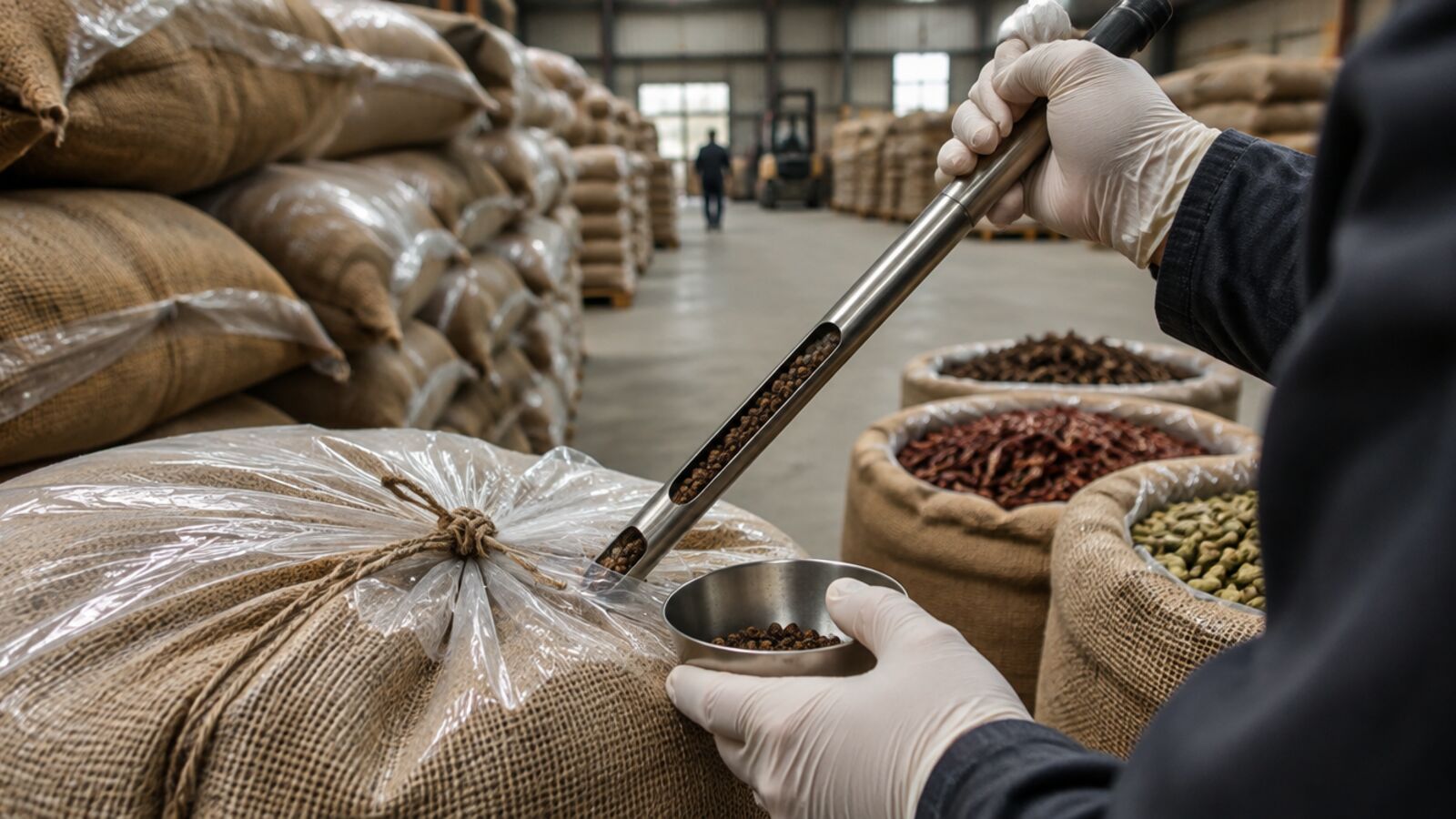
Indian exporters of jeera (cumin), dhania (coriander), turmeric, ginger and curry powder have needed an official certificate for every consignment to England since 1 January 2026, under UK statutory instrument 2025 No. 1162 [1][2]. The rule moved these spices into the UK's list of high-risk foods subject to special import conditions, with 20% of consignments checked at border control posts [2].
The change matters because the certificate must be issued before shipment, which makes Spices Board India's testing and clearance a condition of trade with the UK. It also arrived months before the India-UK trade agreement came into force on 15 July 2026, so exporters gained tariff-free access while facing tighter food safety paperwork [6].
What the regulation changed
The Official Controls (Import of High-Risk Food and Feed of Non-Animal Origin) (Amendment of Commission Implementing Regulation (EU) 2019/1793) (England) Regulations 2025 were made on 3 November 2025, laid before Parliament on 5 November and came into force on 1 January 2026 [1]. They apply in England [1].
Spices Board India summarised the main effects for Indian exporters in Trade Advisory 1/2025-26, dated 25 November 2025 [2]. Ginger, saffron, turmeric, thyme, bay leaves, curry powders and other spices under HS heading 0910 moved from the first schedule to the second, which requires an analytical report for pesticide residues and ethylene oxide. The check rate rose to 20% [2].
Seeds of anise, badian, fennel, coriander, cumin or caraway and juniper berries under heading 0909 also moved to the second schedule. Their reports must cover pesticide residues including picoxystrobin and trichlorfon, with checks at 20% [2][1].
| Indian product (UK) | Hazards tested | Checks |
|---|---|---|
| Cumin, coriander, fennel, anise seeds (0909) | Pesticide residues, ethylene oxide, picoxystrobin, trichlorfon | 20%, certificate required |
| Ginger, turmeric, curry and other spices (0910) | Pesticide residues, ethylene oxide | 20%, certificate required |
| Nutmeg, mace and cardamoms (0908) | Pesticide residues including anthraquinone | 50% |
Sources: UK SI 2025 No. 1162 and Spices Board India [1][2].
Nutmeg, mace and cardamoms remained in the first schedule, but checks rose to 50% and anthraquinone was added to the residues tested alongside pesticides and ethylene oxide [2].
How Spices Board India is issuing certificates
Mandatory pre-shipment testing in India did not yet cover pesticide residues for all the newly listed spices, so the Board set up an interim route [2]. Exporters could request pesticide residue and ethylene oxide testing as a non-mandatory sample. The Board would then facilitate the official certificate on the basis of a cleared analytical report [2].
For consignments of cumin, ginger, turmeric and curry powder already cleared but not yet shipped, exporters could test counter samples held by the Board or provide a new sample if none was available [2]. The Board said its decision on non-mandatory samples would be final, with no appeal [2]. Spices Board India's circular list also records Circular No. 05/2025-26 on the UK certificate requirement from 1 January 2026 [3].
A concession for curry powders and masalas
The Board eased one problem in October 2026. Circular No. 03/2026-27, dated 27 October 2026, says curry powders, masalas and spice mixes bound for the UK will be cleared using the weighted average method under Article 20 of Regulation (EC) No. 396/2005, with immediate effect [4]. Under that method, the residue limit for a blend is calculated from the limits for each ingredient and its share of the product [4].
Exporters now submit ingredient lists through the Board's Export Support System. The list is annexed to the test report [4]. The Board warned that the method does not guarantee clearance at UK border posts and that it may withdraw the facility if UK regulators object [4].
Why the UK matters despite its small share
The UK took 2.9% of India's spice exports, according to a Government of India note issued when the trade agreement took effect on 15 July 2026 [5]. India's total merchandise exports to the UK were US$13.44 billion in 2025-26 [5]. The UK is also a large market for branded curry powders and masalas sold to the diaspora.
Spices Board India data show India exported US$4.43 billion of spices in 2025-26 [7]. Exporters will watch whether the UK, like the EU, raises check rates on Indian cumin after the first year of certificates and whether the weighted average method reduces rejections of compound products.
Questions and answers
Do Indian spices need an official certificate for the UK?
Yes. Since 1 January 2026, Indian seed spices such as cumin and coriander need an official certificate for pesticide residues and ethylene oxide to enter England. The same applies to ginger, turmeric and curry powder. Spices Board India issues the certificate on the basis of a cleared analytical report.
What share of Indian spice consignments does the UK check?
The UK checks 20% of consignments of Indian seed spices and of HS 0910 spices such as turmeric and ginger under SI 2025 No. 1162. Nutmeg, mace and cardamoms from India are checked at 50%.
How are curry powders tested for UK export?
Since Spices Board India Circular No. 03/2026-27 of 27 October 2026, curry powders, masalas and spice mixes for the UK are cleared using the weighted average method, which sets residue limits from each ingredient's limit and share. The Board says this does not guarantee clearance at UK borders.
Sources
- legislation.gov.uk. The Official Controls (Import of High-Risk Food and Feed of Non-Animal Origin) (Amendment of Commission Implementing Regulation (EU) 2019/1793) (England) Regulations 2025, SI 2025 No. 1162, 2025-11-03.
- Spices Board India. Trade Advisory 1/2025-26: requirement of official certificate for export of spices and spice products to the United Kingdom w.e.f. 1 January 2026, 2025-11-25.
- Spices Board India. Export Support System: circulars and trade advisories list, accessed 2026-11-26.
- Spices Board India. Circular No. 03/2026-27: clearance of composite food (curry powders, masalas and spice mixes) using the weighted average method for export to the UK, 2026-10-27.
- Press Information Bureau, Government of India. India-UK CETA comes into effect: strengthening bilateral trade and investment, 2026-07-15.
- Ministry of Commerce and Industry. India and the United Kingdom unleash a next generation economic corridor (CETA to enter into force on 15 July 2026), 2026-06-17.
- Spices Board India. Item-wise export of spices from India, 2021-22 to 2025-26 (source: DGCI&S, Calcutta / MoC), 2026.
Analysis by the India Spices Market editorial desk. For information only, not trading or investment advice.
Related
More from Intelligence.

Policy
EU raises border checks on Indian cumin to 50% after pesticide failures
26 November 2026 · 4 min read
Policy
EU drops ethylene oxide certificate for Indian chilli and pepper in 2026
26 November 2026 · 4 min read
Policy
Turkish cumin faces 50% EU alkaloid checks while Indian seed stays off list
26 November 2026 · 4 min read
Read the market here. Meet it in Gandhinagar.
Every topic on this page is on the programme on 24 April 2027, with the people who move these prices in the room.
Registration opens 1 December 2026