
Dhania
Codex adopts first global standard for dried coriander seed in July 2026
Codex adopted a dried coriander seed standard at CAC49 in Geneva. What it covers, what it does not and what exporters should check.
Published · Data as of · 5 min read
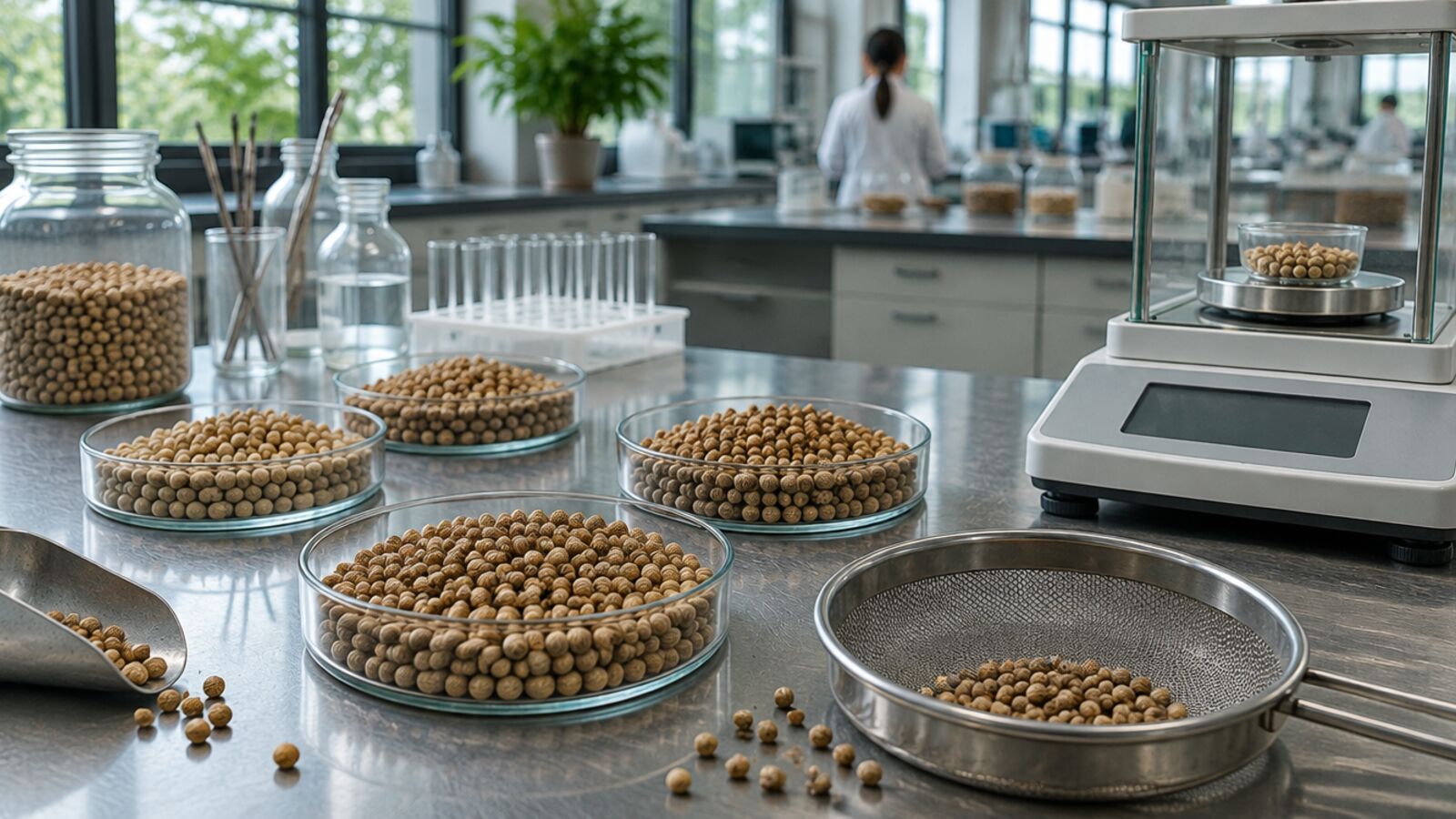
Dried coriander seed now has an international Codex standard. The Codex Alimentarius Commission adopted the Codex Standard for Dried Coriander Seeds at its 49th session in Geneva, held from 6 to 10 July 2026, according to a statement from India's Ministry of Health and Family Welfare reported by All India Radio News [1]. The standard was developed under India's chairmanship [1].
For dhania (coriander) exporters the standard gives buyers and regulators a common reference for quality. Codex standards are voluntary, but the WTO's Agreement on Sanitary and Phytosanitary Measures recognises them as reference standards in international trade and trade disputes [3]. That gives an Indian shipper a benchmark to point to when a buyer or border authority questions a lot.
A three-step path from committee to Commission
The text was finalised at the eighth session of the Codex Committee on Spices and Culinary Herbs (CCSCH8), held in Guwahati and concluded on 17 October 2025, the Ministry of Commerce said [2]. The session recommended standards for large cardamom, vanilla and coriander for adoption [2]. About 30 countries and observers took part [2].
Spice texts adopted at the Commission's 48th session in Rome in November 2025 included maximum levels for lead of 2.5 mg/kg in dried bark spices and 2.0 mg/kg in dried culinary herbs [4]. The coriander, large cardamom and vanilla standards followed at CAC49 in July 2026 [1][3].
| Milestone | Date | Source |
|---|---|---|
| CCSCH8 finalises coriander, large cardamom and vanilla texts | 13 to 17 Oct 2025 | PIB [2] |
| CAC48 adopts lead limits for some spices and herbs | 10 Nov 2025 | FAO [4] |
| CAC49 adopts dried coriander seed standard | 6 to 10 Jul 2026 | All India Radio [1] |
What a Codex spice standard contains
The final adopted text was not found on an open page by 26 November 2026. An earlier, undated draft titled "Draft standard for dried or dehydrated coriander" is hosted by Turkey's Aegean Exporters' Associations (EİB) and shows the structure such standards follow [5]. Its limits may have changed before adoption and should be checked against the published Codex text.
That draft covers whole and ground seed of Coriandrum sativum L. [5]. It set maximum moisture of 10%, total ash of 7%, acid-insoluble ash of 1.5% and minimum volatile oil of 0.1 ml per 100 g [5]. For whole seed it proposed three grades, with extraneous matter of 1.5%, 2.0% and 4.0% at most and foreign matter of 1.0%, 1.5% and 2.0% [5]. It also required declaration of the country of origin and referred residues and contaminants to general Codex limits rather than setting its own [5].
That last point matters. A Codex quality standard does not replace the pesticide limits of the importing country. Exporters must still meet EU, UK, US or Gulf residue rules shipment by shipment.
Residue checks remain the binding constraint
The checks that stop shipments are national. The EU lists seeds of anise, fennel, coriander, cumin and related spices from India for 20% checks for ethylene oxide under Implementing Regulation (EU) 2025/1441 [7]. The United Kingdom moved HS 0909 seed spices, including coriander, into its special-conditions schedule from 1 January 2026, requiring an analytical report for pesticide residues and border checks at 20%, the Spices Board said [8].
A Codex standard can help in these settings by giving exporters, laboratories and buyers a shared definition of grade and test method. It does not change the testing burden.
Why India pushed for it
India has chaired the spices committee since its inception, with the Spices Board as secretariat [3]. India exported 60,211 tonnes of coriander worth US$77.04 million in 2025-26 [6]. Spices Board secretary P. Hemalatha said in October 2025 that India, as a leading producer and exporter of coriander, expected harmonised benchmarks to ease market access [2].
The next step is commercial. A standard only shifts trade when buyers cite it in specifications and when laboratories test to its methods. Traders should watch whether importers in the Gulf, South-East Asia and Africa begin to write the standard into contracts.
Questions and answers
Is there a Codex standard for coriander seed?
Yes. The Codex Alimentarius Commission adopted the Codex Standard for Dried Coriander Seeds at its 49th session in Geneva in July 2026 [1]. It was developed under India's chairmanship of the spices committee [1].
Is the Codex coriander standard mandatory?
No. Codex standards are voluntary, but the WTO SPS Agreement recognises them as reference standards in trade and trade disputes [3]. Importing countries still apply their own residue limits and border checks [7][8].
Which spices have Codex standards?
The Codex spices committee has finalised standards for 19 spices, including pepper, turmeric, cumin, nutmeg, cardamom, saffron and now coriander, large cardamom and vanilla [2].
Sources
- All India Radio News (News On AIR). India strengthens global leadership in food standards at Codex Alimentarius Commission session, 2026-07-14.
- Press Information Bureau, Ministry of Commerce and Industry. India Hosts Successful 8th Session of CCSCH, Finalizes Codex Standards for Vanilla, Coriander, and Large Cardamom, 2025-10-17.
- Drishti IAS, summarising PIB. Codex Commission Adopts Global Standards for Three Spices, 2026-07-18.
- FAO Newsroom. FAO-WHO 48th Session of the Codex Alimentarius Commission adopts new standards, 2025-11-10.
- Aegean Exporters' Associations (EİB), hosted document. Draft standard for dried or dehydrated coriander (undated draft), undated.
- Spices Board India. Item-wise export of spices from India, 2021-22 to 2025-26 (source: DGCI&S / MoC), 2026.
- European Commission (EUR-Lex). Commission Implementing Regulation (EU) 2025/1441 amending Implementing Regulation (EU) 2019/1793, 2025-07-23.
- Spices Board India. Trade Advisory 1/2025-26: official certificate for export of spices to the United Kingdom, 2025-11-25.
Analysis by the India Spices Market editorial desk. For information only, not trading or investment advice.
Related
More from Intelligence.
Dhania
Coriander prices double in a year as NCDEX dhaniya reaches Rs 17,230
26 November 2026 · 5 min read
Dhania
India's coriander imports jump 137% to 26,844 tonnes as Russia fills gap
26 November 2026 · 5 min read
Dhania
Coriander futures curve inverts as April 2027 trades 16% below December
26 November 2026 · 5 min read
Read the market here. Meet it in Gandhinagar.
Every topic on this page is on the programme on 24 April 2027, with the people who move these prices in the room.
Registration opens 1 December 2026